Between Hiding and Belonging
A personal reflection on the places we retreat to, the roles we inhabit, and the wish to belong without concealing ourselves, through Olga Tokarczuk’s The Wardrobe and Farewell My Concubine.
Some of us choose to stay in a comfort zone. Others try to leave it. But is being in a comfort zone really comfortable? I am not sure it always is. Sometimes I am simply familiar with the discomfort. I know which feelings to set aside, which questions not to ask, and what to tell myself so that I can carry on. Some of these explanations are lies I tell myself. Questioning them would mean admitting something I am not ready to face. I call it comfort, but I wonder whether what I am protecting is less my happiness than my understanding of where I belong.
Yet leaving is not necessarily what I want. I may still care about the people, the place, or the life that makes me uncomfortable. I want to remain part of it, just without having to suppress so much of myself. At other times, I want the opposite: somewhere private, away from expectations, where I do not have to make my feelings understandable or acceptable to anyone. These desires can exist together. I want to be left alone, but I also want to be understood. I want protection from the world without losing my connection to it.
This makes me wonder whether hiding and belonging are as different as they appear. We can hide by withdrawing, keeping an inner world that other people cannot enter. We can also hide by blending in, becoming familiar enough that nobody thinks to ask what we have left out. We participate, fulfill our responsibilities, and appear comfortable. But when I am accepted for the version of myself I know how to present, I am not always sure how much of me has actually found a place there. The belonging may be real, yet incomplete in a way that is difficult to explain.

In the title story of Olga Tokarczuk’s The Wardrobe, a couple becomes increasingly drawn to an old wardrobe until they retreat from their ordinary lives to remain inside it. I understand the attraction of such a place. There is relief in not having to respond, explain, or defend anything. I imagine being able to put down the effort of making myself understandable and simply exist. But the retreat also leaves me uneasy. Being beyond the reach of judgment means being beyond the reach of other things, too: an unexpected conversation, a different perspective, the possibility that someone might understand more than I had allowed myself to hope. I do not think their relief has to be false for something to be lost.
“The Hotel Capital” makes me think about a less visible withdrawal. As its narrator puts on her working uniform, she describes setting aside the personal details that distinguish her, including her language, name, and memories. She enters the workplace, but much of her remains outside the role she occupies. This feels closer to the way we can hide while appearing to belong. We learn what a situation needs from us and become skilled at providing it. There is nothing necessarily dishonest about that; no one can bring every part of themselves into every interaction. What unsettles me is the possibility of being valued everywhere for what I contribute, while feeling that there is nowhere I can speak without first deciding which parts to leave out.
The computer worlds created in “Deus Ex” suggest another way of managing that distance: constructing a reality rather than withdrawing from one or finding a role within it. I think we do smaller versions of this without needing a computer. We imagine a future in which our choices will finally make sense, or understand a relationship through what we hope it will become. These stories can give us somewhere to belong before we have found that place in our actual lives. I would not want to dismiss imagination as deception. Still, I wonder when it helps me approach the world and when it allows me to stop asking what is really happening between me and other people.
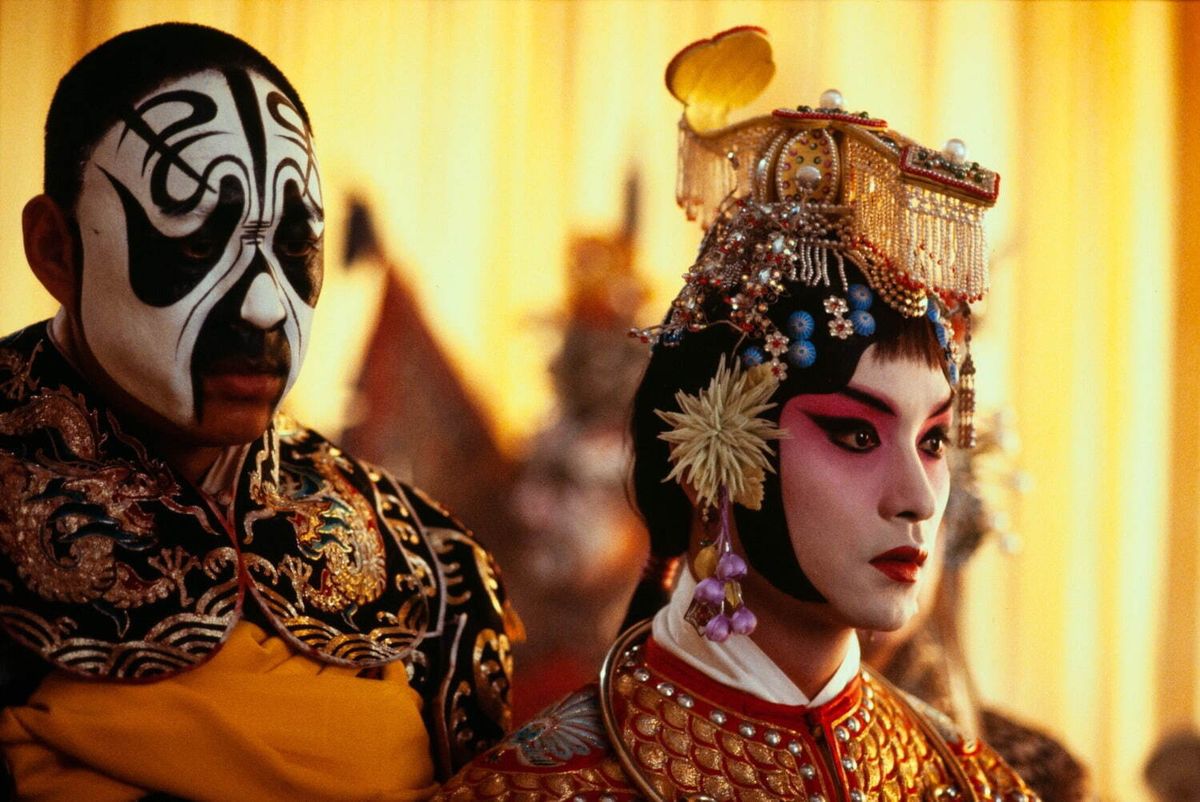
Cheng Dieyi’s world in Farewell My Concubine brings that question into a different setting. His refuge is not somewhere hidden from view. It is a stage, shared with Duan Xiaolou and watched by an audience. Yet Xiaolou maintains a distinction between their performance and their lives, while Dieyi wants the devotion they enact to continue beyond the theatre. What interests me is that the role does not simply conceal Dieyi. I read it as a place where he can express feelings that have nowhere else to go. From the outside, he is playing someone else. From within his own experience, he may feel that this is where he is most fully himself.
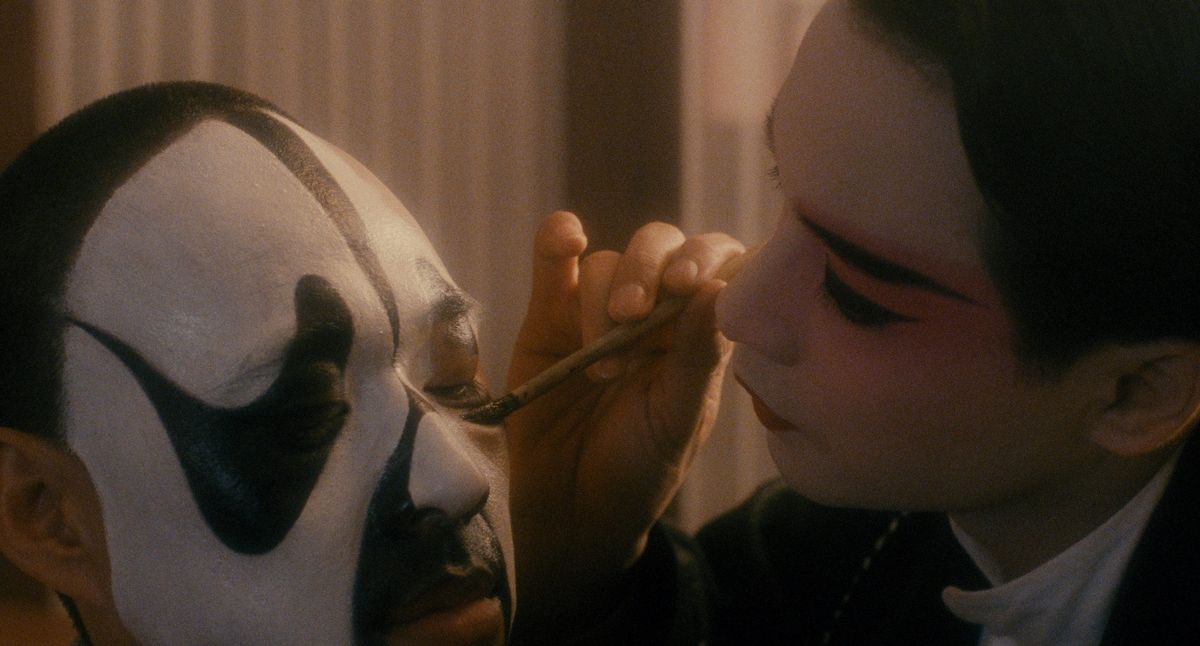
That makes it difficult for me to describe him as merely hiding from reality. He is also reaching toward someone. He wants the life he understands through opera to be shared, not kept entirely within himself. Xiaolou is beside him, repeating the same lines and movements, but their closeness does not mean they understand their bond in the same way. This is what hurts me most: we can share years, habits, and memories with someone without knowing how differently those things belong to each of us. I might take our continued presence in each other’s lives as an answer to a question the other person does not even know I am asking.
I also hesitate to imagine Dieyi’s stage identity as a pure self protected from the outside world. It takes shape through the harsh discipline and abuse of his childhood training. The place he comes to inhabit so completely was not free of other people’s demands. This complicates the idea of retreat for me. What we experience as deeply our own can have origins in things we did not choose. That does not make our attachment unreal. It does mean that going inward cannot always separate us from the world that has shaped us. We may carry its expectations into the very places where we believe we have escaped them.
Nor do I find an easy answer in Xiaolou’s ability to step out of the performance. I understand why he insists that living requires something different from acting. We cannot expect everyone around us to follow the meaning we have given our lives. But adaptation has its own difficulties. How much can we put aside before we no longer recognize our commitments? I am caught between these two fears: becoming so absorbed in my own understanding that nobody can reach me, and becoming so responsive to the world that I no longer know what I would refuse to give up.
The return of Dieyi’s childhood line near the ending makes their distance especially painful to me. Xiaolou begins the line, Dieyi completes it, and Xiaolou corrects him:
Xiaolou: “我本是男儿郎……”
“I was born a boy…”
Dieyi: “又不是女娇娥。”
“Not a girl.”
Xiaolou: “错了!又错了!”
“Wrong! Wrong again!”
Xiaolou responds to a mistake in the performance; I read Dieyi’s reaction as an encounter with something much larger. What they have shared has never meant quite the same thing to both of them. I cannot see his death as a victory for remaining true to himself. What stays with me is the loss of a possible life beyond that realization. I wish there could have been room for him to discover the limits of their shared world without losing every place he felt able to exist.
These stories do not leave me wanting to stop hiding altogether. Privacy matters to me. There are feelings I may not yet understand, and others I simply do not wish to share. I do not think closeness gives anyone a right to all of them. The distinction I keep returning to is whether I am choosing what to keep private or believing that I must conceal it to remain welcome. In the same way, I want to notice whether solitude gives me room to breathe or has become somewhere I stay because I have already decided that nobody outside it could understand.
Perhaps belonging does not require us to be understood completely. I would settle for being able to reveal something that does not fit the familiar version of me without feeling that my place immediately becomes uncertain. I want relationships that can accommodate the discovery that we have misunderstood each other, rather than depending on neither of us mentioning it. And I want to allow others that same room, instead of asking them to remain inside the roles through which I have learned to feel close to them.
I began by asking whether a comfort zone is really comfortable. Now I think I am asking what makes a place feel like mine, and what I am doing to remain there. I may still choose to stay somewhere difficult, or need time alone before I can return to others. I do not need to turn every discomfort into a reason to leave. But I would like to stop pretending that nothing is missing just because I am afraid of what admitting it might change. I want to be able to say that I am uncomfortable and still feel that I am allowed to belong.