Who Am I?
A personal reflection on how family expectations, society, and our experiences shape our sense of self, and what it means to choose our own lives.

There is a difference between being raised to succeed and being raised to become a person capable of choosing our own life. We often assume the two go hand in hand: that if we learn to work hard, make sensible decisions, and achieve what is expected of us, independence will follow. Yet we can spend our childhood pursuing goals that everyone considers valuable and reach adulthood without having seriously questioned what we want. We may know how to succeed within a system while struggling to understand ourselves outside it. Part of the confusion comes from treating competence and autonomy as though they were the same. Competence allows us to perform a task well; autonomy concerns our ability to examine what we want, decide what matters, and take responsibility for our choices. We can become very good at meeting expectations without learning how to question them. The troubling part is that we might not recognize this difference until much later, when we begin to notice the experiences and possibilities we left behind.
I grew up in a family where education was treated as one of the most important parts of life. Academic achievement was not merely encouraged; it became the priority around which many other decisions were made. I am grateful for the opportunities my parents gave me, and I have no reason to doubt that they wanted the best for me. Their support shaped much of what I have achieved, including qualities I still value in myself. At the same time, I learned early that certain choices were considered sensible and promising, while others were distractions from a future already imagined for me. I came to understand what would make my family proud and adjusted my life accordingly. Over time, the distinction between what they wanted and what I wanted became increasingly difficult to identify. I did not necessarily experience every sacrifice as something imposed upon me. Often, it felt like simply doing what I was supposed to do.
One of those sacrifices was the opportunity to pursue volleyball professionally. I loved playing, and becoming a professional player had been a genuine dream of mine. I gave it up to follow the path that seemed more appropriate, and I still regret that decision. Yet volleyball was only the most visible thing I lost. So much of my time was directed toward grades that I had fewer chances to develop other abilities: communicating with people, thinking through questions without being told what answer to reach, making everyday decisions, and accepting the consequences when those decisions went wrong. Even ordinary responsibilities, such as cleaning the house and looking after practical matters, were often kept away from me so that I could concentrate on studying. These tasks may seem minor compared with academic success, but they are part of learning how to live among other people and take care of ourselves. I became increasingly capable as a student without necessarily becoming equally capable of managing the rest of my life.
What stays with me is not the idea that my parents failed me, or that education was a mistake. The difficulty is that something can help us in one direction while limiting us in another. Being spared household responsibilities gave me more time to study, but it also meant fewer opportunities to practice responsibility. Being guided toward a secure future gave me opportunities that I might otherwise never have had, while narrowing the space in which I could explore other futures. I can value what my parents did and still question its consequences. Love, protection, pressure, and control are not always easy to separate, especially when the people involved sincerely believe they are acting in our interests. If we are encouraged to pursue one version of a good life for long enough, we may stop seeing it as one possibility among many and begin to treat it as the natural direction of our lives.
This came back to me while watching the Chinese film Successor (抓娃娃). Its wealthy parents create an elaborate illusion of poverty around their son, arranging his surroundings and many of his encounters so that he will grow into a disciplined, responsible successor to the family business. They want him to understand hardship and develop the character they believe he needs, but they control the conditions under which he learns those lessons. His deprivation is staged; behind the scenes, his parents have the resources to protect him from many of the consequences of the life he thinks he is living. When he discovers how much of his world has been designed for him, the discovery is not just that his parents lied. It is that experiences he understood as his own had been selected to lead him toward a future someone else had chosen.
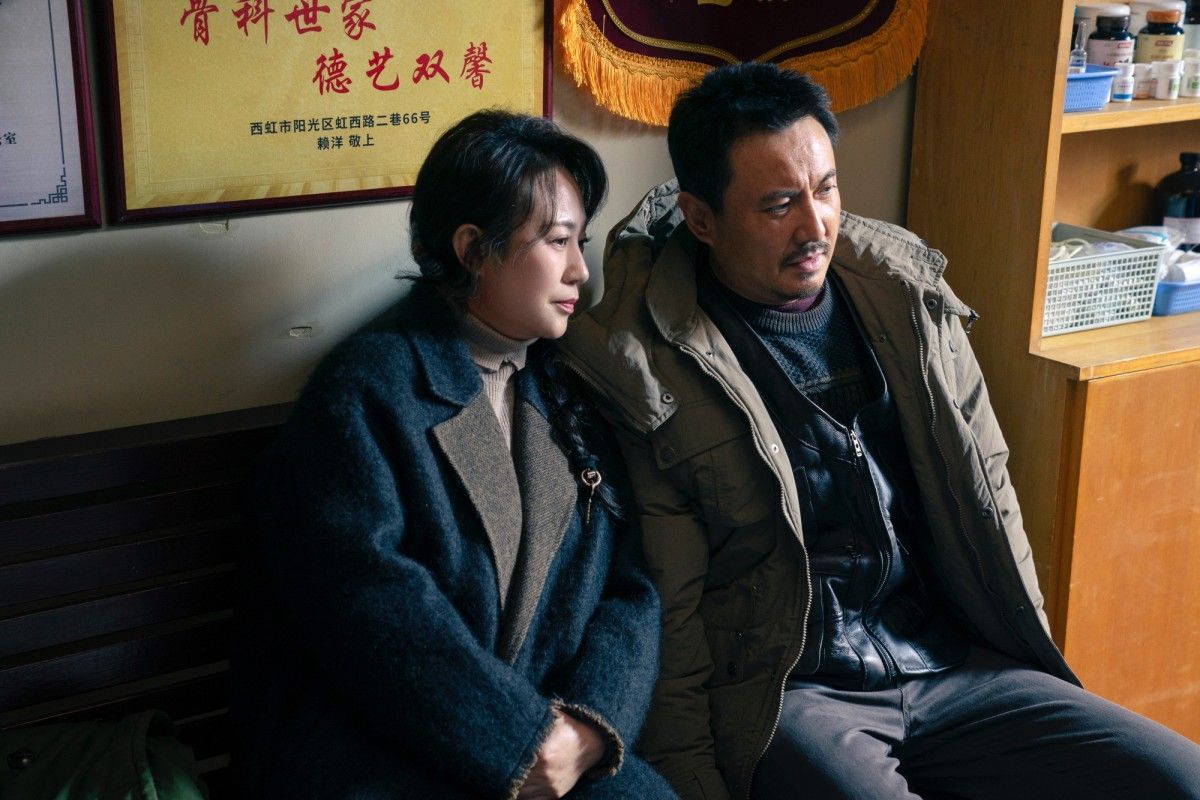
I find the film's contradiction more interesting than a straightforward story about strict parenting. The parents want their child to be capable of facing the world, yet they repeatedly deny him the chance to encounter it on his own terms. They are trying to produce independence through an extraordinary degree of control. In the end, he challenges the future prepared for him and pursues something different, while remaining protected by a level of family security that many people could never rely on. Does his ability to resist show that the upbringing worked, or that an independent part of him survived it? I cannot answer that neatly, and I do not think the film requires us to. It reminds me that producing valuable qualities in a person is not the same as giving that person ownership of their life. We also cannot judge their freedom without noticing the resources and protections surrounding their choices.

My own experience is not the same as the boy's, but the film makes a familiar tension visible. We can grow into people who genuinely appreciate the knowledge, discipline, and opportunities our families gave us while remaining uncertain about the decisions we were encouraged to make. Some of those decisions may have become part of our identity, not because we were forced to accept them in a single moment, but because we repeated them until they felt natural. The question is not whether our parents loved us or whether the results were useful. It is how much room we had to discover what we valued before we learned to evaluate ourselves through their standards. There is no simple way to divide what I gained from what I lost, and I do not want to erase either side of that history.
Another film that has stayed with me is Pearl. On the surface, the conflict between Pearl and her mother, Ruth, seems easier to judge. Pearl longs to leave the farm and become a performer. Ruth insists that she stay, work, and accept the responsibilities of the household. She can appear to be the person most directly preventing her daughter from becoming who she wants to be. Yet I find Ruth difficult to condemn without first looking at the life that brought her to this point. Small details, including the red dress that belonged to her and glimpses of her earlier personality, suggest a woman whose life might once have held very different possibilities. I think about who she may have been before years of work, caregiving, disappointment, and obligation became almost the whole of her existence.
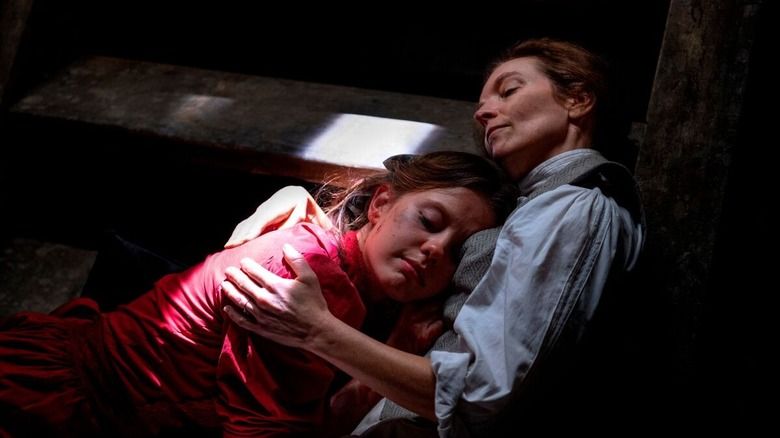
Ruth's tragedy, as I read it, is not necessarily that she made one choice to abandon herself. Her life may have narrowed through a long series of decisions that seemed necessary, responsible, or simply unavoidable. She cared for a family, maintained a farm, and lived with demands that left little room for her own ambitions. Eventually, the role she had accepted became the standard by which she judged Pearl. A woman shaped by social expectations could become the person who enforced those expectations on someone else. This does not make her cruelty harmless or remove her responsibility for it, but it changes the way I understand her. The person who appears to be suppressing another person's individuality may have spent years surrendering parts of her own. Sometimes the expectations we inherit become the very expectations we pass on, without ever deciding that they deserve to survive.
Pearl seems to move in the opposite direction. She rejects the life Ruth has accepted and wants to become someone who can be seen, admired, and recognized beyond the farm. Again and again, she searches for an escape and for people who might help her reach it; again and again, that hope collides with disappointment, rejection, or betrayal. Her eventual violence cannot be justified by those experiences. Still, understanding her actions and excusing them are different things. I want to know what happens when a person's desires grow increasingly incompatible with the circumstances in which they must live, especially when they lack the judgment or support to face that conflict without harming others. Ruth seems to have buried her ambitions beneath obligation; Pearl clings to hers until they become entangled with desperation and destruction. Neither is simply free, and neither can be understood apart from the world around her.

There is another complication that prevents me from treating Pearl as the pure expression of an authentic self. Her desire to become a star is also influenced by what she sees on the screen. The glamour of performance, the promise of recognition, and the idea that being watched might make her life meaningful are not desires that emerged in isolation. They belong to the world she wants to escape. This makes the opposition between mother and daughter less clear than it first appears. Ruth has internalized one set of expectations about responsibility and duty; Pearl pursues another set concerning beauty, fame, and the kind of life worth living. One may have surrendered to the society around her while the other appears to rebel against it, but rebellion is not proof that a desire originated independently. We can resist one set of expectations by embracing another, and still experience that new desire as entirely our own.
This is what brings me back to the question of the self. Before we understand the world's expectations, we experience needs, attachments, and impulses without knowing which behaviors will later be praised or condemned. As we grow, we learn what pleases our parents, what earns a teacher's approval, what makes our peers admire us, and what society calls success. We adjust in response, initially because approval matters or disappointment hurts, and later because those judgments become part of how we understand ourselves. At some point, the line between outside influence and personal conviction becomes difficult to trace. We may pursue recognition without noticing how much of its meaning we learned from others, or reject a way of life without seeing the social ideals behind our rejection. Influence is not always an instruction we consciously obey; more often, it becomes the language and set of standards through which we evaluate our options.
Even when we recognize this process, deciding what is genuinely ours remains difficult. Suppose we begin studying only because our parents expect it, but eventually discover a real love for research. Should that interest count as less authentic because of how it began? If we first seek money because we are taught that wealth represents success, and later come to value the practical independence it can provide, is that still someone else's desire? And if affection matters to us, how can we distinguish the wish to be loved from the wish to be seen as worthy of love? Our motives rarely have a single origin. They change as we gain experience, encounter other people, and reconsider what matters. Identifying an external influence does not automatically make the resulting desire false. At the same time, the fact that a desire feels sincere does not mean we have fully understood it.
I used to imagine that being ourselves meant refusing to be changed by the world, as though an original version of each person existed somewhere beneath the demands placed upon them. I still believe no one has the right to determine another person's identity or require them to become someone they do not wish to be. But the idea of a self untouched by outside influence now seems difficult to defend. Our beliefs are formed through experiences; our relationships alter our judgments; even the words available for describing our emotions come from other people. If we removed every influence that helped shape us, I am not sure what would remain. The self may be less like an object we uncover and more like something that develops through a continuing relationship with the world. That does not make individuality meaningless. It changes the question from how to avoid influence altogether to how we might live with it without surrendering our capacity to judge.
This also affects how I think about meaning. Society provides many ready-made measures of a worthwhile life: a respected career, financial success, admiration, marriage, stability, responsibility. These things can matter deeply, but they do not carry the same meaning for every person. We may pursue a career for the work itself, for security, for the recognition attached to it, or for reasons we are reluctant to admit. We may change ourselves to be liked and only later ask whether the affection we receive is for the person we wanted to be. Nothing about the fact that a goal is widely admired tells us whether it deserves a place in our own lives. Yet neither can we pretend that we decide its meaning in isolation. What matters to us has a history, and understanding that history may be one way of deciding whether we still wish to carry it forward.
There is also a limit to how freely we can make that decision. It is easy to tell people to reject expectations and follow their dreams when we ignore the cost of doing so. Ruth cannot walk away from her responsibilities without consequences for the people who depend on her. Pearl's choices are restricted by her circumstances and by her own responses to them. The son in Successor, whatever his parents have done to him, has material security behind his eventual resistance. The freedom to question a life and the ability to leave it are not the same. We need enough awareness to recognize an alternative, enough practical capacity to pursue it, and some room in our circumstances to bear the consequences. This is why competence, autonomy, and agency matter to me as separate ideas, though I do not want to reduce the essay to a theory of education. The larger issue is the difference between being able to do something, being able to decide whether we want it, and having a real opportunity to act on that decision.
Even with all these distinctions, we may never understand exactly how the world shapes a particular person. Two people can grow up under similar conditions and come away with different values, fears, and ambitions. A form of care that one person remembers as support may be experienced by another as control. People also change their understanding of the past as they move through life. There are parts of ourselves we cannot explain clearly and others we may be unwilling to examine. This uncertainty makes me cautious about claiming that someone's identity can be traced to a single event, a parent's decision, or a social rule. We can look for patterns and ask better questions, but the relationship between a person and the world they inhabit remains complicated, personal, and never entirely visible from the outside.
When I look back at volleyball, I cannot know whether choosing that path would have made my life better. I might have encountered hardships I could not imagine as a child, or regretted opportunities I would have missed elsewhere. I value much of the life I have now, and I do not want to pretend that all the decisions behind it were wrong. My regret is not limited to a career I never pursued. It also concerns the many smaller experiences I missed while working toward the future expected of me: making mistakes, handling everyday problems, learning to understand people, and taking ownership of decisions before I knew exactly how they would turn out. I sometimes wish I had been allowed to discover more of those things for myself, even if I had achieved less along the way. What I wanted was not necessarily a different outcome, but a greater opportunity to understand the choices as mine.
I no longer think autonomy requires us to be free from influence. That would ask us to be free from much of what made us who we are. What matters more is our ability to recognize the expectations we have absorbed, examine the desires we have developed, and decide which of them we are willing to accept. Even that ability is shaped by our history, and we will not always have the freedom to act on what we discover. I cannot draw a clean boundary between my own values and the world that taught me how to value things. Nor can I say with certainty which choices I would make if I had lived another life. But I want to remain able to ask where my convictions came from, whether they still mean something to me, and what I am prepared to do about them. Understanding ourselves may not be a destination we reach. It may be the ongoing work of becoming more conscious of the lives we are already living.